Your AI-Powered Guide to Gas Separations
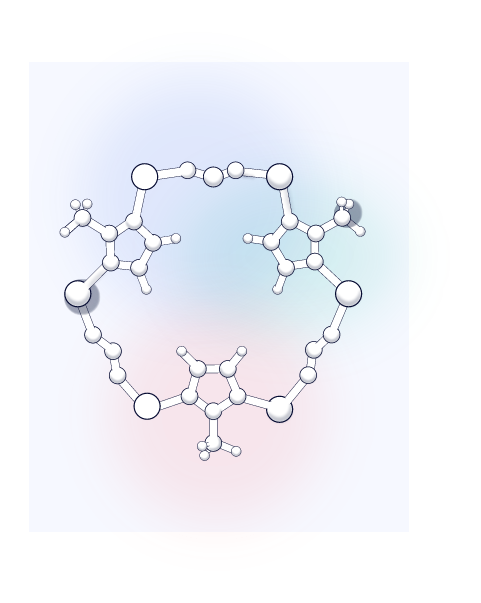
ZIFs are truly remarkable materials! They have tiny pores, just at the molecular scale, and researchers are diving into their potential for creating gas separation membranes. What’s so exciting about them is that we can tweak and modify their structure by replacing different components. But here’s the catch – tinkering with ZIFs in the lab is a time-consuming process. That’s why we’ve developed a smart solution that uses Artificial Intelligence to assist researchers before they start testing their ideas. Our code repository employs a powerful Gradient Boosting Machine Learning algorithm to predict the diffusivity of a gas that you choose, in a ZIF that you create.
Here’s how it works: We’ve built a database of various ZIFs, starting with the well-known ZIF-8, and then playing around with different metals, linkers, and functional groups to craft unique structures. Using DFT computations and TraPPE force fields, we’ve simulated a wide range of gas molecules (from helium to butane) to estimate diffusivity in these new ZIFs. Then, we trained an XGBR regression model to predict gas diffusivity based on the fundamental structural details of ZIFs and gases.
So, design your ZIFs, choose your gas, and get a fast diffusivity prediction!